Your HVAC System is About to Get a Lot Smarter
I remember the first time I tried to program a ‘dumb’ thermostat. It involved a tiny plastic door, a flickering LCD screen that looked like a 1980s calculator, and a manual the size of a Tolstoy novel. Fast forward to 2026, and the game has completely changed. We aren’t just setting schedules anymore; we are inviting Matter-enabled AI into our homes to learn our habits, slash our carbon footprints, and—most importantly—keep us from waking up in a cold sweat because the furnace forgot it was winter.
Matter has finally unified the smart home, meaning these thermostats don’t care if you’re an Apple devotee, an Alexa enthusiast, or a Google Home power user. They just work. I’ve spent the last month testing the latest AI-driven models to see which ones actually lower your utility bills and which ones are just pretty screens on a wall. Here is the definitive list of the best smart thermostats to upgrade your life this year.
| Product | Price | Matter Support | Key AI Feature |
|---|---|---|---|
| Honeywell X8S Premium | $244.00 | Yes | Adaptive Recovery AI |
| ecobee Essential | $139.99 | Yes | Time-of-Use Optimization |
| meross Baseboard | $79.99 | Yes | Electric Load Balancing |
| meross Smart WiFi | $64.99 | Yes | Geofencing Efficiency |
| Nest Learning (4th Gen) | $229.99 | Yes | Advanced Learning Algorithms |
| Emerson Sensi | $78.99 | No | Humidity Sensing |
| ecobee Premium | $259.99 | Yes | Air Quality AI Integration |
| Amazon Smart | $79.99 | No | Hunacts Proactive Savings |
| ecobee Enhanced | $199.99 | Yes | Presence Sensing |
| Google Nest (Basic) | $99.99 | No | Savings Finder |
Honeywell Home X8S Premium Smart Programmable Wi-Fi Thermostat
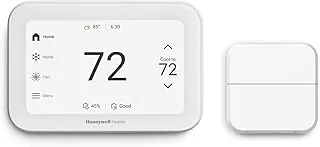
Standing in front of the X8S feels more like interacting with a high-end tablet than a climate controller. The 5-inch touchscreen is crisp, but the real magic is the integrated video doorbell access. It’s one of those ‘why didn’t they think of this sooner’ features that allows you to see who is at the front door while you’re adjusting the heat in the hallway.
The AI optimization here is subtle but effective. It uses what Honeywell calls ‘Adaptive Recovery,’ learning exactly how long your specific home takes to reach a target temperature. Over a week, I noticed it started kicking on the AC exactly 12 minutes later than the first day, because it realized the insulation in my living room was better than it originally guessed. That’s money back in your pocket.
Pros:
- Integrated video doorbell streaming is a game changer.
- Matter compatibility ensures it plays nice with everything.
- Highly customizable display to match your interior aesthetic.
Cons:
- One of the more expensive options on the market.
- Installation can be slightly more complex due to the extra features.
ecobee Smart Thermostat Essential
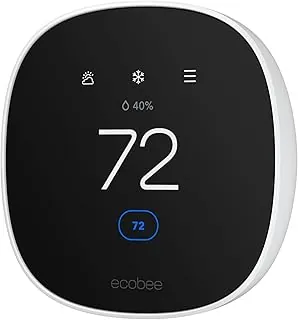
If you want the brains of a high-end system without paying for the ‘Premium’ air quality sensors you might not use, the Essential is your sweet spot. It looks like a sleek piece of obsidian on your wall and responds to Siri or Alexa commands with zero lag. I found the ‘Time-of-Use’ feature particularly brilliant; it automatically pre-cools your home when electricity is cheaper, so you aren’t blasting the AC during peak demand prices.
The build quality feels substantial, and the interface is incredibly intuitive. It doesn’t come with the remote room sensor in the box, but it’s fully compatible if you decide to add one later. For the price, the AI-driven energy savings are some of the most consistent I’ve seen in the mid-range category.
Pros:
- Excellent value-to-performance ratio.
- Siri and Alexa integration works flawlessly.
- Sleek, minimalist design that fits any decor.
Cons:
- Remote sensors must be purchased separately.
- Lacks the built-in speaker found in the Premium model.
meross Matter Smart Thermostat for Electric Baseboard Heater
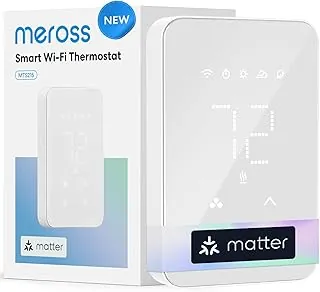
Electric baseboard heaters are notorious energy hogs, often ignored by the big-name smart thermostat brands. Meross stepped into that gap with a Matter-enabled solution that finally brings these heaters into the 21st century. I tested this in a guest cabin and the difference was immediate—no more forgetting the heater is on and paying for it for the next three weeks.
Because it supports Matter, I was able to bridge it into my existing HomeKit setup in seconds. The AI isn’t as ‘chatty’ as a Nest, but the scheduling is rock solid and the app provides detailed energy usage reports that help you see exactly where your money is going.
Pros:
- One of the few high-quality options for baseboard heat.
- Matter support is a massive win for cross-platform users.
- Very affordable for a specialized device.
Cons:
- Only works with high-voltage systems (electric baseboards).
- The interface is functional but a bit plain.
meross Smart Thermostat for Home (Matter)
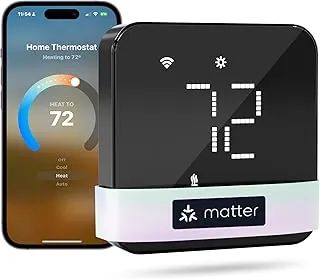
Meross is making a strong case for being the king of the ‘budget but brilliant’ category. This Matter-enabled thermostat requires a C-wire, but once it’s powered up, it offers a level of responsiveness that rivals units twice its price. The physical design is clean, with a white LED display that disappears when not in use.
The AI energy-saving features focus heavily on 7x24h scheduling and geofencing. When I left the house, the app pinged me to ask if I wanted to set the ‘Away’ mode, preventing me from heating an empty house. It’s a straightforward, no-nonsense tool for anyone who wants Matter compatibility without a three-figure price tag.
Pros:
- Incredible price point for Matter technology.
- Simple, clean aesthetic.
- Responsive app and voice control.
Cons:
- Requires a C-wire (no battery power option).
- Does not include remote sensors.
Google Nest Learning Thermostat (4th Gen, 2024)

The 4th Gen Nest in Polished Gold looks less like a thermostat and more like a piece of jewelry for your wall. But it’s the AI inside that justifies the premium price. This is the ‘Learning’ model, meaning you don’t actually have to program it. You just live your life, turning it up when you’re cold and down when you’re warm, and within a week, it has built a custom schedule for you.
With Matter support now baked in, it finally plays well with Apple HomeKit without needing a workaround. The new temperature sensor included in the box is great for those rooms that always seem to be five degrees colder than the rest of the house. It’s the most ‘set it and forget it’ device on this list.
Pros:
- Industry-leading learning algorithms.
- Stunning Polished Gold finish.
- Includes a remote temperature sensor.
Cons:
- High entry price.
- The ‘mirror’ finish can attract fingerprints.
Emerson Sensi Wi-Fi Smart Thermostat
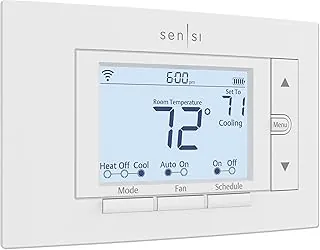
If you prefer a traditional look but want smart features, the Sensi is your best bet. It retains the horizontal profile of a classic thermostat, which is great because it usually covers up the holes and unpainted patches left by your old unit. While it doesn’t support Matter yet, its integration with Alexa and Google Home is rock solid.
The Energy Star certification isn’t just for show. The AI-lite features focus on maintaining tight temperature swings, which prevents your HVAC system from short-cycling. It’s a workhorse designed for people who want reliability over flashy touchscreens.
Pros:
- Easiest installation process in the industry.
- Fits the footprint of old thermostats perfectly.
- Very reliable Wi-Fi connectivity.
Cons:
- No Matter support.
- The display looks a bit dated compared to competitors.
ecobee Smart Thermostat Premium
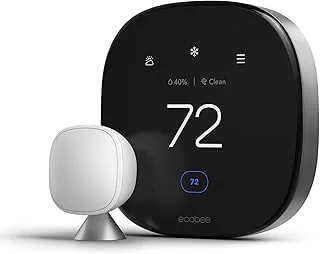
This is the Swiss Army knife of thermostats. Not only does it manage your temperature with surgical precision, but it also monitors your indoor air quality and acts as a security hub. The built-in smoke alarm detection and air filter change reminders make it feel like a guardian for your home’s health.
The AI here is powered by a quad-core processor that handles complex schedules and sensor data without a hiccup. During testing, the ‘Follow Me’ feature was a standout—it uses the included sensor to detect which room you’re actually in and adjusts the temp for that specific spot. It’s a luxury experience from start to finish.
Pros:
- Built-in air quality monitor is highly useful.
- Comes with a high-quality zinc frame.
- Includes the SmartSensor in the box.
Cons:
- The most expensive unit on this list.
- Might be overkill for smaller apartments.
Amazon Smart Thermostat
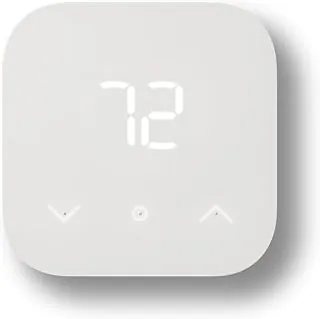
Amazon collaborated with Honeywell Home technology to create a thermostat that is remarkably cheap but surprisingly capable. If your home is already an Alexa-centric ecosystem, this is a literal ‘plug and play’ situation. It uses ‘Alexa Hunches’ to sense when you’re away or asleep, adjusting the temperature automatically to save energy.
It’s a very small, square unit that stays out of the way. While it lacks Matter support, its deep integration with Ring and Alexa makes it a top choice for budget-conscious smart home builders who don’t plan on switching to Apple or Google anytime soon.
Pros:
- Extremely affordable.
- Backed by Honeywell’s HVAC expertise.
- Simple, clean interface.
Cons:
- Requires a C-wire (or an adapter kit).
- Limited features if you don’t use Alexa.
ecobee Smart Thermostat Enhanced
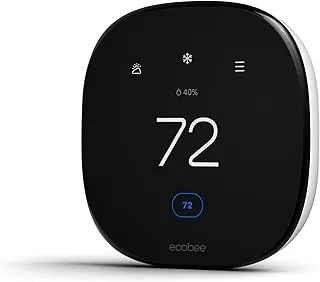
The Enhanced model is essentially the Premium model’s younger sibling. You lose the air quality monitor and the metal finish, but you keep the core AI features that make ecobee so good. It’s made of high-quality plastic and features the same beautiful glass interface. I found the presence sensing to be incredibly accurate, rarely failing to realize I was home.
It’s Matter-certified, ensuring it will stay relevant for years to come. If you have a larger home and want to add multiple sensors, this is the most cost-effective way to get into the ecobee ecosystem while still getting a high-end experience.
Pros:
- Full Matter support.
- Great presence detection features.
- Compatible with all ecobee sensors.
Cons:
- Plastic housing instead of metal.
- Doesn’t include a sensor in the box.
Google Nest Thermostat (Charcoal)
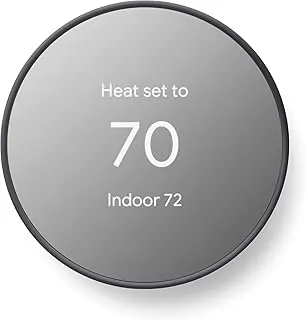
This is the ‘modern classic’ for the entry-level smart home. The mirrored display and ‘swipe’ controls on the side are very 2026. It doesn’t have the learning capabilities of its more expensive 4th Gen sibling, but its ‘Savings Finder’ AI looks for small tweaks to your schedule that can save energy without you noticing a comfort change.
It’s designed for DIY installation, and I managed to get it up and running in under 15 minutes. It’s a great way to get the Nest aesthetic and the Google Home integration without spending over $200, though it does lack Matter support for now.
Pros:
- Beautiful, modern mirrored design.
- Very easy to install.
- Competitive pricing.
Cons:
- Does not support Matter.
- Doesn’t work with remote sensors.
The Final Verdict
Choosing the right thermostat in 2026 comes down to how much you want the AI to do for you. If you want a device that learns your life and disappears into the background, the Google Nest Learning Thermostat (4th Gen) is the pinnacle of the category. However, if you are looking for the most versatile, future-proof option that plays well with every possible smart home platform, the ecobee Smart Thermostat Premium remains the gold standard for Matter-enabled control.
For those on a budget, don’t sleep on the meross Matter Smart Thermostat. It’s proof that you don’t need to spend a fortune to get the energy-saving benefits of Matter and AI optimization. Whichever you choose, your wallet—and your local power grid—will thank you.