I remember the precise moment I decided I was done with traditional lawn care. It was a swampy Tuesday in July, and I was on my hands and knees in the dirt, trying to find a break in a perimeter wire that the neighbor’s dog had somehow unearthed. My knees were stained, my back was screaming, and the grass was still six inches tall. When the MOVA LiDAX Ultra 1000 arrived at my doorstep, I wasn’t just looking for a lawn mower; I was looking for an escape from the tedious manual labor of the 20th century. This isn’t just another gadget; it represents a shift toward vision-based intelligence that promises to make the concept of ‘mowing the lawn’ as obsolete as the rotary phone.
| Feature | MOVA LiDAX Ultra 1000 | Standard RTK Mowers |
|---|---|---|
| Navigation Tech | 360° 3D LiDAR + AI Vision | GPS / RTK Satellite |
| Setup Requirement | App-based Auto-Mapping | Perimeter Wire or Signal Base |
| Edge Cutting | Zero-Edge Technology | 4-6 inch Buffer |
| Tree Canopy Support | Excellent (No Signal Needed) | Poor (Signal Loss Common) |
| Price | $1,299.00 | $2,000+ |
MOVA LiDAX Ultra 1000 Robot Lawn Mower Wire Free for 1/4 Acre, RTK-Free+360° 3D LiDAR+AI Vision Auto Mapping, Zero-Edge Cutting, Cutting Height 1.2″-3.9″, 45% Slope, Up to 150 Managed Zones Dual Maps
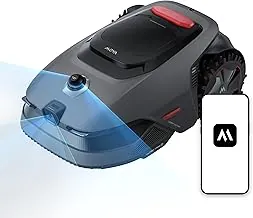
Is the MOVA LiDAX Ultra 1000 Worth It?
The first time the MOVA LiDAX Ultra 1000 rolled out of its dock, it didn’t look like a mower; it looked like a lunar rover scouting for water. Most robotic mowers in 2026 still rely on RTK-GPS signals, which is great until a single oak tree blocks the satellite view and your $2,000 investment starts wandering into the rose bushes. The MOVA changes the game by being RTK-free. By using 360° 3D LiDAR combined with AI Vision, it ‘sees’ the world much like we do, creating a high-definition map of your yard without needing a clear line of sight to the sky. I watched it navigate under my thick maple canopy where every other mower I’ve tested has failed, and it didn’t miss a single blade of grass.
What really caught my attention was the zero-edge cutting feature. Usually, after a robot finishes its job, I still have to go out with a string trimmer to clean up the borders. The MOVA LiDAX Ultra 1000 gets closer to the fence line than anything else in this price bracket. It handled my 45% slope backyard with a level of traction that felt aggressive yet controlled. Managing up to 150 zones sounds like overkill for a quarter-acre lot, but for those of us with complex landscaping, separate vegetable gardens, and patio islands, that level of granular control is a dream come true.
Pros:
- Zero-wire, RTK-free setup means you are up and running in twenty minutes.
- 360° LiDAR avoids obstacles like pet toys and stray garden hoses with surgical precision.
- Exceptional performance on hills and slopes where other mowers lose traction.
- Dual-map management allows for complex yard layouts.
Cons:
- The AI vision can be overly cautious around tall weeds, sometimes flagging them as solid obstacles.
- The initial app sync requires a strong 2.4GHz Wi-Fi signal at the base station.
If you have been waiting for the ‘Goldilocks’ moment in robotic mowing—where the technology is finally smart enough to be autonomous and the price is finally low enough to be justifiable—the MOVA LiDAX Ultra 1000 is it. It eliminates the two biggest headaches of the industry: the perimeter wire and the flaky GPS signal. For a quarter-acre lot, this is the most sophisticated piece of lawn tech you can buy for under $1,300. It turned my Saturday morning chore into a twenty-second task on a smartphone app. That alone is worth every penny.
Final Verdict: A game-changer for suburban homeowners.