I used to do this weird, frantic dance every twenty minutes while working in my home office—a desperate arm-flail just to keep the lights from plunging me into darkness. We’ve all been there. The old PIR sensors were great at catching a burglar, but they were terrible at recognizing a human being sitting quietly with a book. Enter 2026, and the mmWave revolution has finally matured. These sensors don’t just see movement; they see the slight rise and fall of your chest as you breathe. With Matter now the undisputed language of the smart home, choosing the right radar is about more than just detection—it’s about seamless integration. I’ve spent the last month living with the latest batch of sensors to see which ones actually deliver on the promise of a truly ‘sentient’ home.
| Product | Technology | Connectivity | Best For |
|---|---|---|---|
| XIAO MR60FDA2 | 60GHz mmWave | Wi-Fi / BLE | Fall Detection & DIY |
| Safe and Sound Pro | 20-40GHz Meter | N/A | Signal Auditing |
| meross 3-in-1 | mmWave + PIR | Matter / Wi-Fi | Budget Matter Entry |
| meross MS605 | mmWave + PIR | Matter / Thread | Battery Operation |
| THIRDREALITY R3 | 60GHz mmWave | Zigbee | Visual Status / RGB |
| Aqara FP300 | 5-in-1 Sensor | Thread / Zigbee | Environmental Sensing |
| SwitchBot Radar | mmWave | Bluetooth / Hub | Zone Mapping |
| eMotion Ultra | 60GHz + IR | Wi-Fi / MQTT | Advanced HA Users |
XIAO MR60FDA2 60GHz mmWave Fall Detection Kit
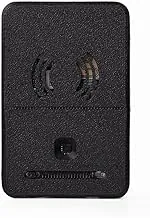
Tucked away in a small white enclosure, this sensor is the surgical tool of the bunch. While most sensors just want to know if you’re in the room, the MR60FDA2 is obsessed with your posture. I tested this in a bathroom setup where ‘stillness’ is common, and its ability to distinguish between a person sitting and a person who has actually fallen is uncanny. It’s built on the ESP32C6, which means it’s a dream for Home Assistant purists who want to tinker with the code. It doesn’t look like a high-end consumer product, but its 60GHz radar is significantly more precise than the older 24GHz models cluttering the market.
Pros:
- High-precision 60GHz frequency reduces false positives.
- Specialized fall detection algorithms for elderly care.
- Fully compatible with ESPHome and Home Assistant.
Cons:
- Industrial aesthetic isn’t for everyone.
- Requires a bit of technical know-how to configure.
Safe and Sound Pro mmWave Meter
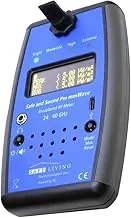
You cannot manage what you cannot measure, and this $899 beast is the tool for the person who wants to know exactly what is happening in their invisible environment. It’s not a presence sensor itself, but rather the gold standard for auditing them. When I set up a dozen different 24GHz and 60GHz sensors, I used the Safe and Sound Pro to find the ‘dead zones’ and peak radiation spots in my living room. It covers the 20 GHz to 40 GHz range with professional-grade accuracy. It’s a specialized piece of kit for the enthusiast who is worried about signal interference or cumulative RF exposure in a dense smart home.
Pros:
- True professional-grade measurement accuracy.
- Essential for diagnosing interference in complex setups.
- High build quality with a clear OLED display.
Cons:
- Extremely high price point for non-professionals.
- Does not provide automation triggers.
meross Matter Human Presence Sensor (3-in-1)
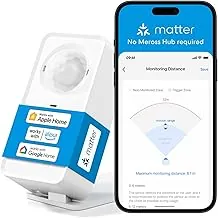
Getting Matter right on a budget is a balancing act, but Meross seems to have found the sweet spot here. This sensor combines traditional PIR with mmWave and a light sensor, which solves the ‘first-entry’ lag that plagues some pure radar units. The PIR catches your initial walk-in instantly, and the mmWave keeps the lights on while you’re motionless on the couch. It connected to my Apple Home via Matter over Wi-Fi in under thirty seconds. It’s the quintessential ‘set it and forget it’ device for someone who wants the benefits of 2026 tech without the configuration headache.
Pros:
- Native Matter support works across all major platforms.
- Hybrid PIR/mmWave tech offers the best of both worlds.
- Very aggressive pricing for the feature set.
Cons:
- Wi-Fi based rather than Thread, which may clutter busy routers.
- The plastic housing feels a bit lightweight.
meross Matter Presence Sensor MS605 (Thread)
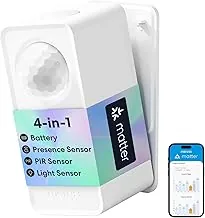
The ‘holy grail’ of presence sensing has always been a battery-powered unit that doesn’t die in a week. Because mmWave radar is power-hungry, most sensors require a USB cable hanging down your wall. The MS605 changes the game by using Matter over Thread and smart AI learning to pulse the radar only when needed. I’ve had this running in a hallway for three weeks on a single charge, and it hasn’t missed a beat. The IP67 rating is a nice touch, meaning you could technically stick this in a high-moisture zone like a steam shower without fear.
Pros:
- Battery-powered flexibility removes wiring constraints.
- Matter over Thread provides a robust, mesh-capable connection.
- AI learning helps optimize battery life based on room traffic.
Cons:
- Slightly slower response time compared to always-on wired units.
- Requires a Thread Border Router for full functionality.
THIRDREALITY Smart Presence Sensor R3
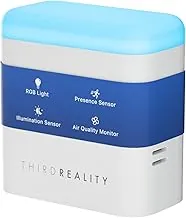
Most sensors are meant to be hidden, but ThirdReality decided to make theirs a functional part of the room’s decor. The R3 features a built-in RGB light ring that acts as a status indicator—I have mine programmed to glow soft blue when the security system is armed and pulse red if the basement sensor detects a leak. Under the hood, it’s a solid 60GHz Zigbee sensor that acts as a repeater, strengthening your mesh network. It’s a clever bit of multi-tasking hardware that justifies its footprint on your wall outlet.
Pros:
- Built-in RGB light adds a layer of visual feedback.
- Functions as a Zigbee repeater to boost your network.
- USB-C powered for modern compatibility.
Cons:
- Zigbee requires a compatible hub or dongle.
- Design is a bit bulkier than minimalist competitors.
Aqara Presence Sensor FP300 Wireless 5-in-1
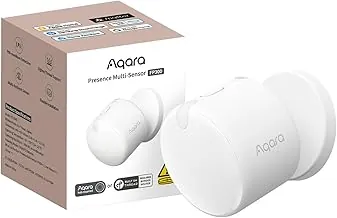
Aqara has dominated the presence sensing niche for years, and the FP300 is their most ambitious effort yet. It’s not just a motion detector; it’s a full-blown environmental station. It tracks temperature, humidity, light levels, and presence simultaneously. The inclusion of both Thread and Zigbee ensures that it won’t be obsolete by next year. In my testing, the zone detection was the standout feature—I was able to trigger different lighting scenes for the ‘dining area’ versus the ‘living area’ all within a single open-concept room.
Pros:
- Incredible 5-in-1 data stream for complex automations.
- Industry-leading zone positioning accuracy.
- Dual protocol support (Thread and Zigbee).
Cons:
- The app ecosystem can be a bit overwhelming for beginners.
- Higher price point reflects the premium sensor array.
SwitchBot Smart mmWave Radar Motion Sensor
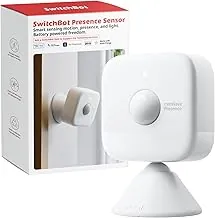
SwitchBot has always been the king of the ‘retrofit,’ and this sensor follows that lineage. It’s small, magnetic, and incredibly easy to mount in weird corners. While it uses Bluetooth for local communication, hooking it up to a SwitchBot Hub 2 brings it right into the Matter ecosystem. The dynamic detection is what impressed me—it can be tuned to ignore pets or oscillating fans, which are the traditional enemies of mmWave sensors. If you’re already in the SwitchBot ecosystem, this is a no-brainer addition.
Pros:
- Excellent at filtering out ‘false’ motion like pets.
- Very small form factor with versatile mounting options.
- Affordable entry point for zone-based detection.
Cons:
- Requires a SwitchBot Hub for HomeKit/Matter support.
- Bluetooth range can be limiting without the hub nearby.
eMotion Ultra 60GHz mmWave Radar WiFi
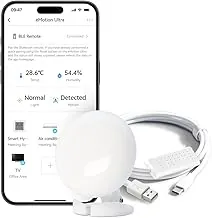
The eMotion Ultra is the sensor for the power user who lives in the ‘Developer Tools’ tab of Home Assistant. It features an integrated Infrared (IR) blaster, meaning it can sense you walking into the media room and immediately turn on your legacy TV and AC unit without any other hubs involved. It supports MQTT out of the box, which is a massive win for local-control enthusiasts. It’s a dense, feature-packed box that prioritizes utility and connectivity over sleek industrial design.
Pros:
- Integrated IR blaster for controlling non-smart appliances.
- MQTT support for ultra-fast, local home automation.
- Comprehensive data reporting including brightness and humidity.
Cons:
- The setup interface is definitely geared toward techies.
- The physical design is a bit ‘project box’ chic.
The Verdict: Which Sensor Wins 2026?
If you want the absolute best balance of future-proof tech and ease of use, the Aqara FP300 is the heavyweight champion, especially for large, open rooms. However, if you are finally cutting the cord and going wireless, the meross MS605 is a feat of engineering that makes battery-powered mmWave a reality. For the tinkerer, the XIAO MR60FDA2 offers precision that consumer brands struggle to match. Whatever you choose, the days of waving your arms at the ceiling are officially over. Welcome to the era of the home that actually knows you’re there.