The End of the ‘Smart Home Statue’
You’ve been there: sitting perfectly still on the sofa, deep into a thriller, when the living room lights decide you’ve clearly left the building and plunge you into darkness. You wave your arms like a stranded sailor, hoping the PIR sensor catches a glint of movement. It’s a ritual we’re all tired of. By 2026, the smart home has finally evolved past simple motion detection into the era of true human presence. Thanks to mmWave radar and the universal language of Matter, our homes now know we’re there simply because we’re breathing. I’ve spent the last month living with nine of the most promising sensors on the market to see which ones actually deliver on the promise of invisible, effortless automation.
| Sensor | Connectivity | Radar Tech | Special Power |
|---|---|---|---|
| Meross MS605 | Matter over Thread | mmWave + PIR | Battery Powered |
| Aqara FP2 | Wi-Fi (Matter Bridge) | 60GHz mmWave | Zone Mapping |
| Aqara FP300 | Thread/Zigbee | mmWave + Multi-sensor | 5-in-1 Data |
| ThirdReality R3 | Zigbee (Matter Bridge) | 60GHz mmWave | Visual Status LED |
| WenzhiIoT | Zigbee | 5.8GHz mmWave | Ultra-Budget |
| Sonoff SNZB-03P | Zigbee | PIR Only | 3-Year Battery |
| Sonoff SNZB-06P | Zigbee | 5.8GHz mmWave | Fast Detection |
| Akamatis v2.2 | Wi-Fi (ESP32) | LD2410B mmWave | Open Source Power |
| Economy CMU | Proprietary/Wired | Standard Motion | Healthcare Utility |
meross Matter Presence Sensor MS605
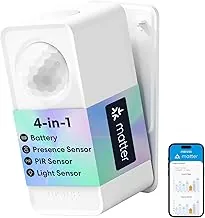
Ditching the power cord felt like a pipe dream for mmWave technology until Meross figured out the power management puzzle. The MS605 is a rare beast in 2026: a battery-powered sensor that uses Matter over Thread to stay snappy without draining its juice in a week. It combines traditional PIR for fast initial triggers with mmWave to keep the lights on while you’re motionless. During my testing, it handled a steamy bathroom environment perfectly, never once losing track of me in the shower. The IP67 rating means you can mount it almost anywhere without fear of humidity or dust.
- Pros: No wiring required; Matter over Thread works natively with Apple and Google; dual-tech sensing reduces false negatives.
- Cons: Slightly bulkier than wired-only units; battery life depends heavily on traffic frequency.
Aqara Presence Sensor FP2
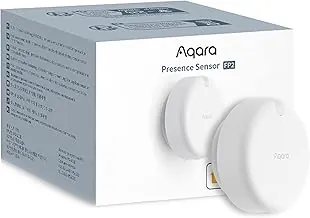
If your smart home had a central nervous system, it would look a lot like the Aqara FP2. This isn’t just a sensor; it’s a spatial awareness engine. It tracks up to five people simultaneously and allows you to map out specific zones in a room. I set mine to trigger the reading lamp when I’m in the armchair, but keep the overheads on only if someone is at the dining table. It even features fall detection, making it a subtle but powerful tool for checking on elderly relatives. While it relies on Wi-Fi, its integration into Matter via the Aqara hub makes it a cornerstone for complex automations.
- Pros: Incredible multi-person tracking; precise zone mapping; high-resolution 60GHz radar.
- Cons: Requires a constant power source; setup process is more involved than simpler sensors.
Aqara Presence Sensor FP300
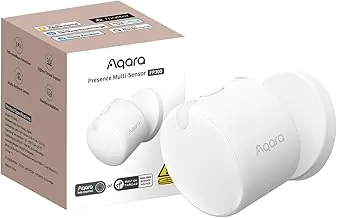
Versatility is the name of the game with the FP300, a device that feels like the Swiss Army knife of the smart home world. By packing mmWave, PIR, light, temperature, and humidity sensors into one chassis, it eliminates the ‘sensor clutter’ on your walls. I found the environmental data surprisingly accurate, allowing me to trigger my humidifier and my lighting from a single point of data. It supports both Thread and Zigbee, ensuring it stays relevant as Matter ecosystems continue to mature through 2026.
- Pros: Consolidates five sensors into one; high sensitivity for micro-movements; future-proof connectivity.
- Cons: Higher price point for those who only need presence; Zigbee mode requires a compatible hub.
THIRDREALITY Smart Presence Sensor R3
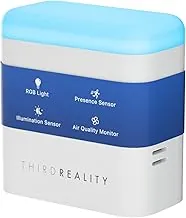
Sometimes you need a visual confirmation that your smart home is actually watching, and the ThirdReality R3 provides exactly that with its integrated RGB status light. Beyond the 60GHz radar precision—which is top-tier—the R3 acts as a Zigbee repeater, strengthening your mesh network as it works. The USB-C power input is a welcome modern touch, doing away with proprietary barrels or thin wires. In my office setup, the illumination sensor was the standout, perfectly balancing my smart blinds based on the actual sunlight hitting the desk.
- Pros: 60GHz radar is remarkably sensitive; doubles as a range extender; sleek status lighting.
- Cons: Needs a Zigbee-to-Matter bridge for the full Matter experience; stand mount is a bit lightweight.
WenzhiIoT Smart Motion Sensor Zigbee
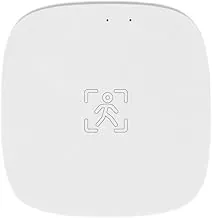
Budget builds often require a compromise, but the WenzhiIoT sensor brings mmWave technology to the masses at a price that’s hard to ignore. Using the 5.8GHz frequency, it’s not as granular as the 60GHz models, but for a laundry room or a hallway, it’s more than enough. It detects luminance alongside presence, which is essential for ensuring your lights don’t turn on during a bright afternoon. It’s a no-frills entry point for those wanting to experiment with human presence without the ‘luxury’ tax.
- Pros: Extremely affordable; small footprint; includes light level sensing.
- Cons: 5.8GHz can occasionally see through thin walls; lacks the ‘zone’ features of high-end models.
SONOFF SNZB-03P Zigbee Motion Sensor
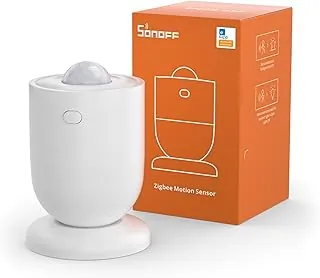
While the rest of the world moves toward radar, there is still a place for a perfected PIR sensor, and the SNZB-03P is exactly that. It doesn’t offer ‘static presence’—meaning if you sit perfectly still, it will lose you—but for high-traffic zones like stairways, its 3-year battery life is unbeatable. I use these as ‘scouts’ to wake up the rest of the system. If you’re looking for a low-cost way to trigger an alarm or a quick path light, this is the most reliable tool in the shed, provided you have a Sonoff bridge for Matter compatibility.
- Pros: Legendary battery life; near-instant trigger times; very inexpensive.
- Cons: Cannot detect a stationary person; requires a bridge for Matter.
SONOFF Human Presence Sensor SNZB-06P
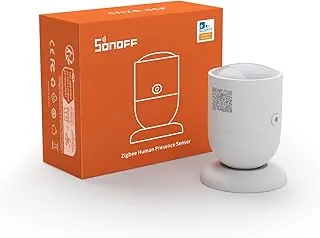
The SNZB-06P is Sonoff’s answer to the presence revolution, and it’s a punchy little contender. Operating on the 5.8GHz band, it’s designed to be wired in and left alone. What I appreciated most during testing was the lack of ‘cooldown’ time; as soon as I stepped into the kitchen, the kettle automation was live. It’s a workhorse sensor that focuses on doing one thing—detecting humans—and doing it reliably without the fluff of extra environmental sensors.
- Pros: Very competitive pricing; consistent detection; easy mounting options.
- Cons: Sensitive to moving fans or flowing water; requires a USB power source.
AKAMATIS Human Presence Sensor v2.2

For the power users who spend their weekends tweaking Home Assistant dashboards, the Akamatis v2.2 is a dream come true. Built on the Seeed C3 and utilizing the LD2410B radar module, this sensor offers a level of transparency and tuning you won’t find in big-brand products. The external antenna gives it a massive range advantage in larger open-plan living areas. It’s a ‘prosumer’ device that rewards those who want to fine-tune their sensitivity gates to avoid detecting the dog while still catching a sleeping human.
- Pros: Highly customizable via ESPHome; excellent range; external antenna for stable Wi-Fi.
- Cons: Industrial aesthetic might not suit every living room; requires more technical knowledge to set up.
Motion Sensor for Economy Central Monitoring Unit
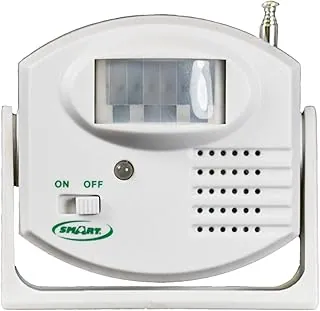
This is a specialized tool that reminds us where motion sensing technology started. While it lacks the fancy mmWave radar of the others on this list, it’s built for rock-solid reliability in care environments. It’s designed to work with central monitoring units, making it more of a ‘utility’ player than a ‘lifestyle’ gadget. In a modern Matter home, this would be the secondary fail-safe in a security system rather than the primary driver for your mood lighting.
- Pros: Built for 24/7 reliability; simple integration with legacy monitors.
- Cons: Lacks modern presence detection; dated design; limited smart home features.
The Verdict for 2026
Choosing the right sensor in 2026 comes down to your tolerance for wires and your need for detail. If you want the absolute pinnacle of smart home tech, the Aqara FP2 remains the king of spatial awareness. However, for most of us, the meross MS605 is the real game-changer, finally giving us the freedom to place presence detection anywhere without an electrician. Whether you’re building a DIY masterpiece with the Akamatis or outfitting a whole house on a budget with Sonoff, the ‘frozen wave’ is officially a thing of the past. Your home finally knows you’re there—even when you’re just catching your breath.