I was sitting perfectly still in my home office, nursing a lukewarm espresso and staring at a blank cursor, when the lights suddenly cut out. It’s the classic smart home betrayal—the PIR sensor decided that because I wasn’t waving my arms like a maniac, I’d clearly left the building. This is the exact moment I realized that standard motion sensors are essentially relics of the past.
In the high-end smart home landscape of 2026, we demand more than just ‘motion detection.’ We want a house that breathes with us, understands our posture, and knows exactly which corner of the sofa we’ve claimed for a Sunday nap. Enter the Aqara FP2. It doesn’t just see movement; it senses presence. I’ve spent the last month living with this mmWave powerhouse to see if it finally solves the ‘statue challenge’ once and for all.
| Feature | Aqara FP2 | Aqara FP1 | Standard PIR Sensor |
|---|---|---|---|
| Technology | mmWave (60GHz) | mmWave | Infrared (Heat) |
| Detection Zones | Up to 30 | 1 | None (Full view) |
| Person Tracking | Up to 5 people | 1 person | Motion only |
| Connectivity | Wi-Fi / Matter | Zigbee | Zigbee / Thread |
| Fall Detection | Yes | No | No |
Aqara Presence Sensor FP2
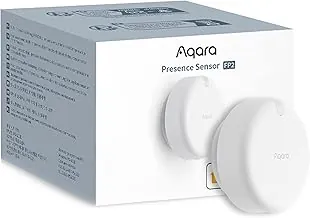
Is the Aqara Presence Sensor FP2 Worth It?
Setting up the Aqara FP2 feels less like installing a gadget and more like mapping a digital twin of your room. Unlike the sensors of yesteryear that simply blast an infrared beam and hope for the best, the FP2 uses millimeter-wave radar to track up to five people simultaneously. I spent an afternoon defining ‘zones’ in the Aqara Home app—drawing a rectangle over my desk, another over the reading nook, and a third over the entryway. Now, the lights over my monitor kick in the second I sit down, but the overhead gallery lights stay off unless I actually walk into the center of the room.
The precision is bordering on uncanny. Because it detects micro-movements—even the slight rise and fall of your chest as you breathe—the ‘lights-out-while-reading’ frustration is officially dead. In 2026, with Matter support being fully matured, the FP2 integrates seamlessly into HomeKit, Home Assistant, and Alexa without the need for an Aqara-specific hub, which was the final hurdle this device needed to clear for total dominance.
It isn’t just about lights, though. I tested the fall detection in the bathroom (strictly for science, I assure you), and the sensitivity is impressive. It can distinguish between someone sitting down quickly and someone actually hitting the floor, sending a critical alert to my phone in seconds. However, it isn’t perfect. Being a Wi-Fi device, it needs a constant power source via USB-C, so you’ll have to get creative with cable management if you want that clean, minimalist aesthetic.
Pros:
- Multi-zone Tracking: Define up to 30 distinct areas in one room for hyper-specific automations.
- No-Motion Detection: Stays active even if you are sleeping or perfectly still.
- Matter Compatibility: Works across all major smart home ecosystems natively.
- Built-in Light Sensor: Adds another layer of logic to your daytime/nighttime routines.
Cons:
- Wired Power Only: Requires a USB cable, which limits placement compared to battery-operated PIR sensors.
- App Complexity: Mapping the room for the first time takes patience and a bit of trial and error.
The Final Verdict
The Aqara FP2 is a transformative piece of tech for anyone serious about home automation. We’ve moved past the era of waving our hands at the ceiling like we’re at a concert just to get the lights back on. While the $82.99 price tag is steeper than a basic motion sensor, the utility of 30 sensors packed into one housing makes it a bargain for the power user. If you want a home that feels intuitive rather than reactive, this is the upgrade you’ve been waiting for.