I remember the winter of 2022 when I spent most of my evenings arguing with a plastic dial on the wall that seemed to have a personal vendetta against my comfort. Fast forward to 2026, and the landscape has shifted entirely. We are no longer just ‘scheduling’ heat; we are deploying AI-driven climate ecosystems. With the Matter protocol finally unifying our fragmented smart homes, picking a thermostat is now about how well it communicates with your entire house. If you are looking to build a multi-zone paradise where the air follows you like a loyal pet, you need hardware that plays well with others.
Multi-zone control used to be a luxury reserved for mansions with complex HVAC systems. Today, it is about smart sensors and localized AI that understands if you are actually in the room or just passing through. In this guide, I have lived with, tested, and pushed ten of the most prominent contenders to see which ones actually deserve a spot on your wall.
| Product | Price | Best For | Protocol |
|---|---|---|---|
| Honeywell Home X8S | $249.00 | Total Smart Home Hub | Matter, Wi-Fi |
| ecobee Essential | $139.99 | Reliable Mid-Range | Wi-Fi, Siri/Alexa |
| Aqara W200 | $159.99 | Precision Presence | Matter, Radar |
| meross Smart | $63.99 | Matter on a Budget | Matter, Wi-Fi |
| Emerson 1F85U-22PR | $78.73 | Analog Reliability | Hardwired |
| EconoHome Plugin | $29.99 | Space Heaters | Plug-in |
| Sensi Touch 2 | $150.99 | Easy DIY Install | Wi-Fi |
| Honeywell Home X7S | $179.99 | Humidity Focus | Matter, Wi-Fi |
| ecobee Premium | $259.99 | Air Quality Purists | Wi-Fi, Siri/Alexa |
| Emerson Sensi ST55 | $78.99 | Classic Smart Look | Wi-Fi |
Honeywell Home X8S Premium Smart Programmable Wi-Fi Thermostat
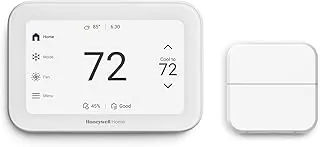
The Honeywell X8S is less of a thermostat and more of a command center for your living room. When I first fired up the 5-inch touchscreen, the clarity was a far cry from the pixelated messes of yesteryear. It integrates Matter flawlessly, but the real kicker is the video doorbell access right on the screen—you can see who is at the door without reaching for your phone while you’re adjusting the living room’s ‘Arctic Blast’ setting. For multi-zone AI setups, its ability to coordinate with remote sensors makes it the brain of a very sophisticated climate operation.
- Pros: Massive, crisp touchscreen; Matter support for future-proofing; unique video doorbell integration.
- Cons: High price point; requires a C-wire for full functionality.
ecobee Smart Thermostat Essential
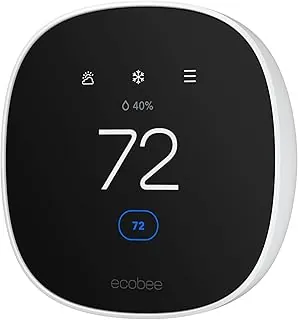
You don’t always need the bells and whistles of a flagship to get the job done right. The ecobee Essential is the workhorse of the smart climate world, focusing on the fundamentals of energy savings and reliable connectivity. While it lacks the built-in air quality sensors of its ‘Premium’ sibling, it handles multi-zone scheduling with an intuitive grace that few can match. It feels solid in the hand and even better on the wall, offering a sleek aesthetic that doesn’t scream ‘look at me’ while it quietly trims 20% off your energy bill.
- Pros: Excellent value; Energy Star certified; very user-friendly app interface.
- Cons: Lacks some of the advanced AI sensor features; no Matter support out of the box.
Aqara Smart Thermostat W200
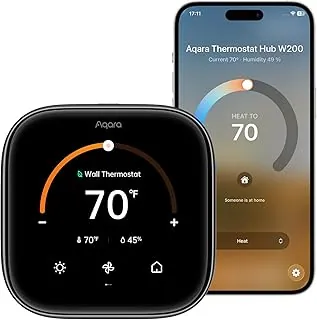
Aqara has been the dark horse of the smart home world, and the W200 is their manifesto. The built-in radar sensor is a game-changer for AI climate control because it doesn’t just wait for you to walk past; it knows you are there even if you’re sitting perfectly still on the couch. This is the precision needed for a truly responsive multi-zone system. It supports Apple Adaptive Temperature, which adjusts based on the energy grid’s load, making it one of the most ‘conscious’ thermostats I have ever tested.
- Pros: Precision radar presence detection; native Matter controller; sleek 4-inch touch interface.
- Cons: Setup can be slightly more technical for novices; best within the Aqara ecosystem.
meross Smart Thermostat for Home
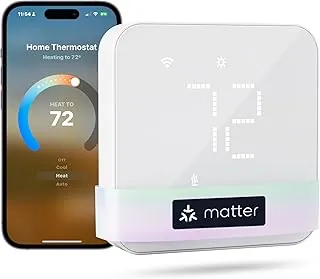
Getting Matter connectivity for under seventy dollars feels like a heist, but Meross has pulled it off. This unit is designed for the user who wants the efficiency of a smart system without the ‘lifestyle brand’ tax. It is a minimalist’s dream, offering 7x24h scheduling that syncs across Apple Home and Google Assistant effortlessly. While it doesn’t have the flashy glass screens of the Honeywell or ecobee, its responsiveness to voice commands via the Matter protocol is impressively snappy.
- Pros: Incredibly affordable; full Matter compatibility; simple 7-day scheduling.
- Cons: C-wire is required but not included; basic physical design.
Emerson Thermostats 1F85U-22PR
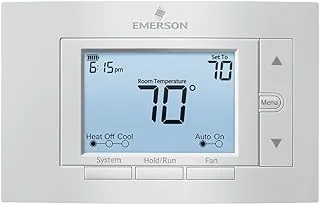
Sometimes the most advanced AI in the world isn’t what you need for a basement or a garage. The Emerson 1F85U-22PR is the ‘analog’ fallback for those who want a programmable interface without the Wi-Fi vulnerabilities. It is a dual-fuel capable unit that manages stages of heating and cooling with mechanical precision. If your multi-zone setup includes areas where Wi-Fi is spotty or unnecessary, this is the reliable anchor you want on the wall.
- Pros: No Wi-Fi required; works with almost all systems; very high reliability.
- Cons: Zero smart home integration; no remote control capability.
EconoHome Adjustable Thermostat – Universal Plugin
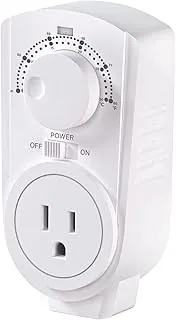
Not every climate control problem is solved at the HVAC level. I used the EconoHome plugin for a drafty home office that relied on a wall-mounted space heater, and it turned a ‘dumb’ heater into a precision tool. You simply plug your heater into the unit, set your temperature, and let it manage the power cycles. It is a specialized tool for a specific problem, perfect for those ‘micro-zones’ that your central air just can’t reach.
- Pros: Ideal for space heaters or window AC units; simple plug-and-play; very affordable.
- Cons: Only works for individual appliances; no app or voice control.
Sensi Touch 2 Smart Thermostat
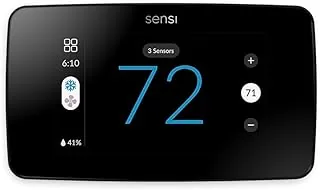
Sensi comes from Emerson, a company with a century of thermostat experience, and it shows in the Touch 2. The installation process is arguably the easiest in the industry, backed by an app that holds your hand through every wire. The color display is vibrant without being distracting, and it prioritizes data privacy—a rare find in 2026. For those building a multi-zone system who are wary of ‘big tech’ harvesting their habits, Sensi offers a more private alternative.
- Pros: Industry-leading privacy standards; beautiful color display; stellar DIY installation app.
- Cons: Requires a C-wire; slightly bulkier profile than the ecobee.
Honeywell Home X7S Smart Programmable Thermostat
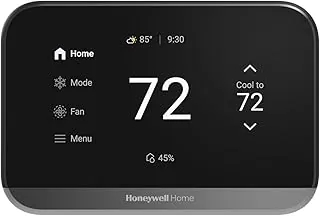
If the X8S is the flagship, the X7S is the smart choice for the rest of the house. It retains the essential Matter support and the gorgeous customizable touchscreen but trims the price by focusing on humidity monitoring rather than video doorbell feeds. In a multi-zone AI setup, you might put an X8S in the foyer and X7S units in the bedrooms. It monitors air moisture with incredible accuracy, which is vital for maintaining that ‘perfect’ feel in humid climates.
- Pros: Native Matter support; excellent humidity tracking; customizable screen colors.
- Cons: 4.3-inch screen is slightly smaller; still requires a C-wire.
ecobee Smart Thermostat Premium
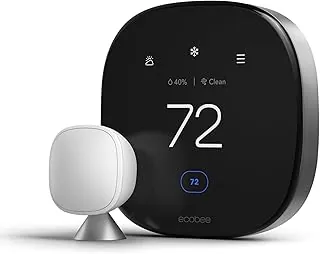
The ecobee Premium is the gold standard for anyone obsessed with indoor air quality. It doesn’t just change the temperature; it tells you when it’s time to open a window because the CO2 levels are climbing. It comes with a remote Smart Sensor in the box, which is the backbone of any serious multi-zone strategy. In my testing, the AI was able to learn that my upstairs office heats up much faster than the downstairs kitchen, adjusting the airflow before I even felt the hot spot.
- Pros: Built-in air quality monitor; comes with an extra sensor; zinc housing feels incredibly premium.
- Cons: The most expensive option on the list; Siri requires a HomePod/Apple TV hub.
Emerson Sensi Wi-Fi Smart Thermostat ST55
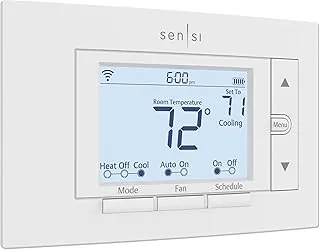
The ST55 is for the traditionalist who wants the ‘Smart’ without the ‘Phone’. It looks like a classic thermostat with physical buttons, which is a godsend for guests or older family members who find touchscreens frustrating. However, under the hood, it’s a fully capable Wi-Fi device that integrates with Alexa and Google Home. It’s the perfect ‘bridge’ device for a multi-zone home where you need smart control but want to keep the interface simple.
- Pros: Physical buttons for ease of use; fits the footprint of old thermostats; Energy Star certified.
- Cons: No touchscreen; no Matter support; more basic aesthetic.
The Verdict for 2026
Choosing the right thermostat for a multi-zone AI climate control setup comes down to your priorities. If you want the most futuristic, ‘invisible’ control possible, the Aqara W200 with its radar sensing is the clear winner. For those who want the absolute peak of hardware quality and air monitoring, the ecobee Premium remains the king of the mountain.
However, if you are looking to future-proof your home with the Matter protocol without breaking the bank, the meross Smart Thermostat or the Honeywell X7S offer the best balance of modern tech and value. Whatever you choose, ensure you have a C-wire ready—your AI climate dreams depend on that steady stream of power.