I spent three hours last night arguing with my heat pump. Well, not the pump itself, but the data streaming from my electrical panel. In the old days—way back in 2023—we used to wait for a paper bill to arrive like a digital jump-scare. Today, the conversation has changed. We aren’t just watching numbers climb; we’re using AI-integrated monitors to predict failures before they happen and shave hundreds off our annual spend.
The tech has matured beautifully. We’ve moved past simple clamps to sophisticated AI pattern recognition that knows exactly when your fridge compressor is starting to fail or if your EV is pulling a suboptimal charge. Whether you are a hard-core Home Assistant hobbyist or someone who just wants a ‘set it and forget it’ solution, the 2026 lineup of energy monitors is the smartest hardware you’ll ever put in your breaker box.
| Product | Sensors | AI/Smart Integration | Price |
|---|---|---|---|
| Refoss Open API | 16 x 60A | Home Assistant, MQTT, Native UI | $169.98 |
| Emporia Vue 3 (Bundle) | 16 x 50A | Solar/Net Metering, App Focus | $199.99 |
| Shelly Pro 3EM | 3-Phase | LAN, Bluetooth, Alexa/Google | $154.99 |
| Refoss Local Storage | 16 x 60A | Local API, No Cloud Required | $169.99 |
| Meross 18-Circuit | 18 Sensors | Home Assistant, Smart Alerts | $169.99 |
| SIEMENS Inhab | 16 x 50A | Enterprise-Grade, Main Sensors | $267.75 |
| Tapo P115 (4-Pack) | Plug-level | Tapo App, Matter Coming Soon | $25.98 |
| Kasa Matter Plug | Plug-level | Matter, Apple Home, Alexa | $21.98 |
| Emporia Vue 3 (Base) | Main Only | Cloud Analytics, Solar Ready | $149.99 |
| AI-Powered Monitor | Panel-wide | AI Pattern Recognition, HA | $119.98 |
Refoss Home Energy Monitor, Native Open API & Web UI
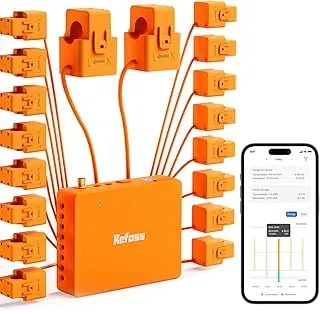
The Refoss Home Energy Monitor feels like a love letter to the privacy-conscious tech enthusiast. While other brands force you through a convoluted cloud registration, this unit greets you with a native Web UI that stays strictly on your local network. It comes with sixteen 60A sensors, which is enough to map out a medium-sized suburban home with surgical precision. During testing, the integration with Home Assistant via MQTT was seamless, providing real-time updates that feel instantaneous rather than the usual 30-second lag we see in cheaper units.
- Pros: No cloud required for operation; massive sensor count for the price; excellent Home Assistant support.
- Cons: Installation can be cramped in smaller breaker panels; UI is functional rather than flashy.
Emporia Vue 3 Home Energy Monitor – Smart Automation Bundle
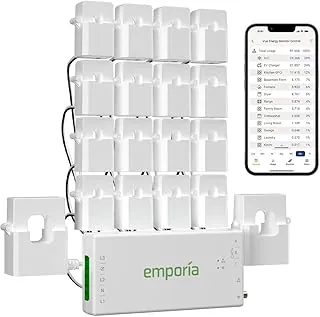
Emporia has long been the gold standard for data visualization, and the Vue 3 continues that legacy with better accuracy and UL certification for peace of mind. The AI here shines in its ability to detect ‘phantom loads’—those tiny energy vampires that suck power while you sleep. The setup includes 16 sensors, and the app’s ability to overlay your utility’s specific rate tiers means the ‘dollars spent’ metric is actually accurate, not just a rough estimate.
- Pros: Industry-leading app interface; highly accurate cost tracking; UL certified safety.
- Cons: Requires a constant internet connection for full features; bulky main unit.
Shelly Pro 3EM (120A) | Wi-Fi & LAN
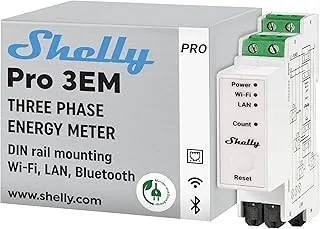
If you live in a home with 3-phase power or you’re looking for industrial-grade reliability, the Shelly Pro 3EM is the undisputed heavyweight. It’s DIN-rail mountable, making it look like a native part of your electrical panel rather than an after-market add-on. The inclusion of an Ethernet (LAN) port is a game-changer for those of us with metal breaker boxes that act like Faraday cages, killing Wi-Fi signals instantly. The built-in Bluetooth gateway also allows it to act as a hub for other Shelly sensors in your garage or basement.
- Pros: Wired LAN connection for stability; DIN-rail mountable; no hub required.
- Cons: Only monitors 3 phases/circuits out of the box; setup is more technical.
Refoss Smart Home Energy Monitor with Local Data Storage
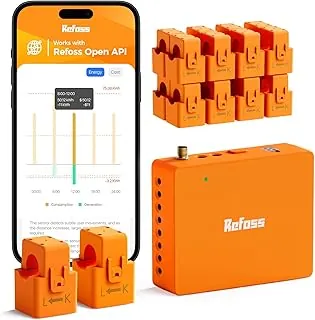
This variation of the Refoss unit focuses heavily on data longevity. It features local data storage, ensuring that if your internet goes down, your energy history doesn’t vanish into a black hole. It’s a workhorse for solar net metering, showing you exactly how much juice you’re pushing back to the grid in real-time. The ETL certification provides that extra layer of confidence for homeowners worried about insurance compliance.
- Pros: Local data logging; great for solar monitoring; ETL certified for safety.
- Cons: Web UI can feel a bit ‘dated’ compared to mobile-first apps.
Meross Smart Energy Consumption Monitor (18 Circuits)
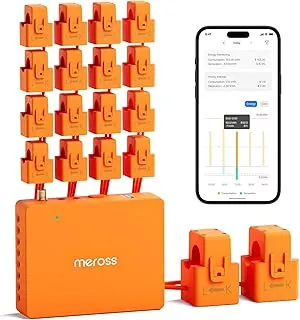
Meross has stepped up its game by offering 18 circuit sensors, the highest count in this price bracket. This allows you to monitor every single bedroom, the kitchen, and even that dedicated wine fridge without having to group circuits together. The AI alerts are particularly punchy—it will ping your phone if your dryer has been running for four hours, potentially saving you from a fire hazard or just a massive waste of electricity. The 2-year warranty is a nice touch for a device that lives in the gut of your home.
- Pros: Massive 18-circuit capacity; proactive smart alerts; easy setup for beginners.
- Cons: The clamps are a bit larger than Emporia’s; app can be cluttered with other Meross products.
SIEMENS Inhab Smart Home Energy Monitor
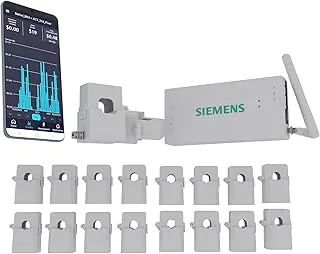
When a name like Siemens enters the smart home space, you expect engineering excellence, and the Inhab delivers. This system is designed to work within the broader Siemens ecosystem but stands alone as a premium monitoring solution. The 200Amp main sensors are incredibly robust, and the AI algorithm is specifically tuned to recognize heavy machinery—perfect for those with home workshops or high-draw HVAC systems. It’s more expensive, but you’re paying for hardware that is built to outlast the house itself.
- Pros: Exceptional build quality; high-accuracy main sensors; reputable brand.
- Cons: High entry price; fewer sensors included relative to the cost.
TP-Link Tapo Smart Plug Wi-Fi Mini (4-Pack)
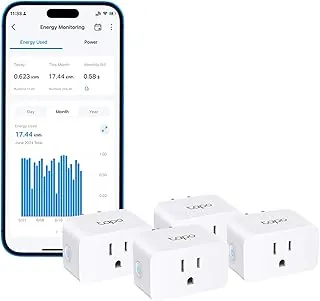
Not every energy monitoring journey needs to start inside a dangerous breaker box. The Tapo P115 4-pack is the ‘gateway drug’ to energy awareness. These plugs are tiny—they won’t block the second outlet—and they provide surprisingly granular data for individual appliances. I used these to find out that my ‘energy efficient’ dehumidifier was actually the biggest hog in my basement. They are perfect for renters who can’t mess with their electrical panels.
- Pros: Extremely affordable; no installation required; great for individual appliance tracking.
- Cons: Only monitors what is plugged into them; limited to 15A loads.
Kasa Smart Plug, Matter Compatible (2-Pack)
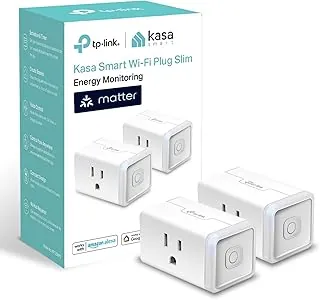
Matter is the future of the smart home, and these Kasa plugs are leading the charge. By supporting the Matter protocol, these plugs don’t care if you’re an Apple Home enthusiast or an Alexa devotee; they just work. The energy monitoring is snappy, and the Matter integration ensures that the response time for turning off a power-hungry device is nearly zero. They are compact, reliable, and future-proof.
- Pros: Matter compatibility; works with Apple HomeKit; very easy setup.
- Cons: Only two in a pack; limited to 2.4GHz Wi-Fi networks.
Emporia Vue 3 (Base Unit/Main Monitoring)
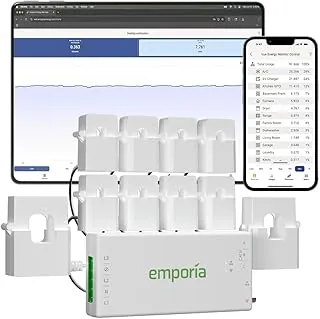
If you only care about the ‘big picture,’ the base Emporia Vue 3 is the most cost-effective way to get high-level AI insights. By monitoring the two main 200A lines, the AI can still ‘guess’ what appliances are running based on their unique electrical signatures. It’s less precise than having individual circuit clamps, but it’s much faster to install and gives you 80% of the value for a lower price point. It’s also fully ready for solar and net metering integration.
- Pros: Faster installation; lower price; same great app as the full bundle.
- Cons: Lacks circuit-level granularity; AI ‘recognition’ isn’t as accurate as direct sensors.
AI-Powered Home Energy Monitor (Value Pick)
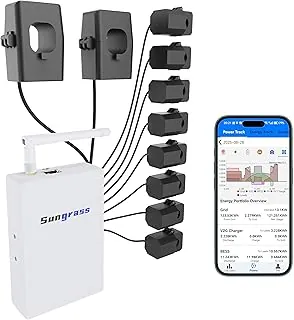
This is the dark horse of 2026. Priced aggressively, this monitor leans heavily into AI pattern recognition to make up for a simpler hardware profile. It integrates surprisingly well with Home Assistant, providing a ‘Power Monitor’ entity that just works. It’s a great choice for those who want to dip their toes into energy tracking without the $200+ investment. The AI claims to learn your habits over 14 days, and in my experience, it accurately identified my coffee maker and microwave by day five.
- Pros: Very budget-friendly; surprisingly smart pattern recognition; quick installation.
- Cons: Brand longevity is unknown; plastic casing feels a bit cheap.
The Final Verdict
Choosing a monitor in 2026 comes down to your personal philosophy on data. If you want to own your data and keep it off the cloud, the Refoss Open API unit is your best bet—it’s a power user’s dream. For those who want the most polished experience and the best mobile app, the Emporia Vue 3 Bundle remains the king of the hill. And if you’re just starting out? Grab a Tapo 4-pack and prepare to be shocked by how much your old toaster is actually costing you. Whatever you choose, you’re finally the one in control of your panel, not the utility company.