I remember the old thermostat in my childhood home—a beige, circular plastic relic that made a satisfying ‘thunk’ every time my father adjusted it by exactly one degree. Fast forward to 2026, and that thunk has been replaced by the silent, invisible logic of Matter-enabled AI. We no longer just set a schedule; we teach our homes how to breathe. The latest generation of thermostats doesn’t just wait for you to feel cold; it watches the local energy grid, monitors air quality, and learns that you usually want the bedroom at exactly 68 degrees three minutes before you actually walk through the door.
This year, the ‘Matter’ standard has finally matured from a tech-buzzword into a household essential, allowing your Apple HomeKit sensors to talk to your Google Nest without a digital translator. If you are looking to cut your carbon footprint while maintaining a high-end lifestyle, these AI-optimized devices are the smartest upgrades you can make to your walls.
| Product | AI Focus | Display Size | Matter Support |
|---|---|---|---|
| Honeywell X8S | Security & Comfort | 5.0″ Touchscreen | Yes |
| Google Nest (4th Gen) | Predictive Learning | Dynamic Dial | Yes |
| ecobee Premium | Air Quality & HVAC | Vibrant Glass | Yes |
| Sensi Touch 2 | Privacy & Simplicity | Color Touch | Yes |
| SunTouch ConnectPlus | Floor Heating AI | 4.3″ Screen | Yes |
| tekmar Invita | Hydronic Logic | Modern Slim | Yes |
Honeywell Home X8S Premium Smart Programmable Wi-Fi Thermostat
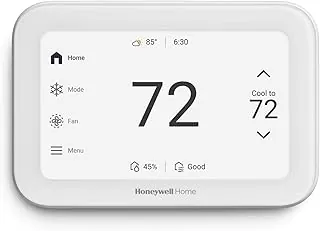
Walking up to the Honeywell X8S feels more like approaching a command center than a simple temperature dial. The 5-inch customizable touchscreen is the star of the show here, but the real magic is the integrated video doorbell access. It is the only device on this list that lets you check who is at the front door while you are adjusting the humidity in the hallway. In 2026, its Matter integration is flawless, allowing it to act as a central hub for your entire HVAC ecosystem.
The AI energy optimization isn’t just about scheduling; it uses advanced sensor features to detect room occupancy and local weather shifts, adjusting the heat pump cycles to prevent unnecessary wear. It is a heavy-hitter for those who want their thermostat to be the brain of the home.
p>Pros:
- Large, highly responsive 5-inch color display
- Unique integration with video doorbells
- Robust humidity and ventilation control
Cons:
- Physical footprint is larger than competitors
- Premium price point
Google Nest Learning Thermostat (4th Gen, 2024)
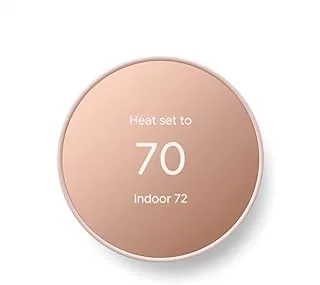
The 4th Generation Nest Learning Thermostat in Polished Gold is less of a gadget and more of a piece of jewelry for your wall. It represents the pinnacle of Google’s AI efforts, utilizing a new suite of sensors that can feel when you are across the room and light up with relevant data. The ‘Adaptive Eco’ mode now uses Matter-standard data from other devices in your home to decide when to save energy, making it far more accurate than previous versions.
The inclusion of the Nest Temperature Sensor in the box ensures that the AI isn’t just guessing the temperature in the nursery based on what’s happening in the living room. It is fluid, beautiful, and deeply intelligent.
Pros:
- Stunning industrial design in Polished Gold
- Best-in-class AI learning algorithms
- Comes with a remote temperature sensor
Cons:
- Polished finish attracts fingerprints
- Software ecosystem is heavily Google-centric
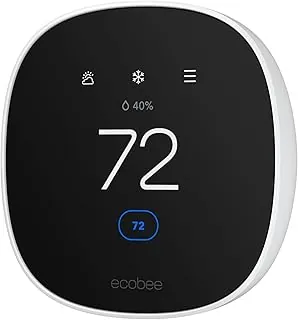
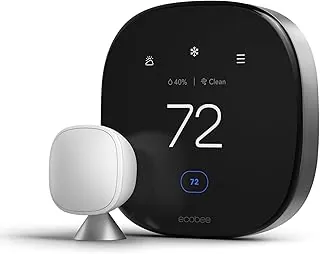
ecobee Smart Thermostat Premium
If you care about the air you breathe as much as the temperature of your room, the ecobee Premium is the gold standard. Built with a heavy zinc body and a glass face, it feels incredibly high-end. Its standout 2026 feature is the integrated air quality monitor, which alerts you to VOCs and CO2 levels, triggering your ventilation system through Matter if things get stale.
The AI optimization here is focused on ‘Time of Use’ billing, meaning it waits for electricity prices to drop before cranking the AC. It is a data-heavy device for the homeowner who wants total transparency over their environment.
Pros:
- Built-in indoor air quality monitor
- High-quality zinc and glass construction
- Works natively with Siri, Alexa, and Google
Cons:
- The interface can feel slightly cluttered
- Requires a C-wire for most installations
Sensi Touch 2 Smart Thermostat
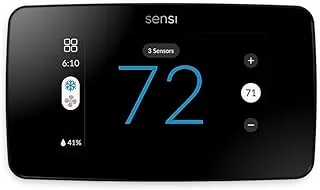
The Sensi Touch 2 is the thermostat for the person who hates ‘smart’ gadgets that are too clever for their own good. Backed by 100 years of Emerson expertise, it focuses on extreme reliability and data privacy. Unlike other AI units that might share your habits with advertisers, Sensi keeps your data locked down.
The color display is crisp and straightforward, and the DIY installation is the easiest in the industry. Its AI optimization is subtle, focusing on maintaining the most efficient cycle for your specific furnace type rather than trying to predict your life story.
Pros:
- Top-tier data privacy standards
- Extremely easy DIY installation process
- Reliable physical performance
Cons:
- Design is a bit traditional/boxy
- Fewer ‘extra’ features compared to Nest or ecobee
SunTouch SunStat ConnectPlus
Most smart thermostats ignore the floor, but the SunStat ConnectPlus lives for it. Designed specifically for electric floor heating systems, this is the luxury choice for primary suites and spa-like bathrooms. The AI here is tuned for ‘thermal mass’—it understands how long it takes for a tile floor to heat up and cool down, ensuring the floor is warm exactly when your feet hit the ground in the morning.
With voice activation and remote access, it integrates into the broader Matter network to ensure your floor heating isn’t fighting your ceiling cooling.
Pros:
- Specialized control for electric floor heating
- Large 4.3-inch touchscreen
- Voice-activated and Matter compatible
Cons:
- Very niche use case (floor only)
- Expensive compared to standard HVAC units
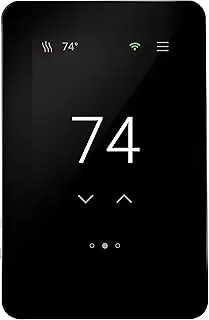
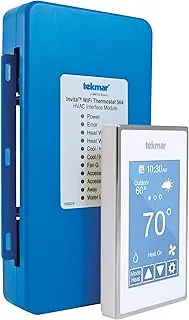
tekmar Invita Wi-Fi Thermostat
The tekmar Invita is the HVAC professional’s secret weapon. It is designed to handle complex systems—think multi-stage heat pumps, ERVs, and HRVs—that consumer-grade thermostats often struggle with. Its 2-wire design is a lifesaver for older homes where pulling a C-wire is an architectural nightmare.
The AI energy optimization is industrial-grade, managing airflow and heat exchange with surgical precision. It is slim, modern, and focuses on the health of your mechanical equipment as much as your comfort.
Pros:
- Professional-grade control for complex HVAC
- Ideal for 2-wire older home retrofits
- Supports ERV/HRV ventilation systems
Cons:
- User interface is functional rather than ‘pretty’
- Higher price bracket for technical specs
ecobee Smart Thermostat Essential
Not every room needs a zinc-plated air quality monitor. The ecobee Essential provides the core smart experience—Matter support, Energy Star certification, and great AI scheduling—at a much friendlier price point. It looks nearly identical to its premium sibling but focuses on the basics of keeping your home efficient.
It still works perfectly with Siri and Alexa, making it a great choice for guest rooms or secondary zones where you want smart control without the ‘Premium’ price tag.
Pros:
- Excellent value for a Matter-enabled device
- Very sleek, minimalist aesthetic
- Reliable ecobee software ecosystem
Cons:
- Lacks the air quality sensor
- Plastic construction instead of zinc
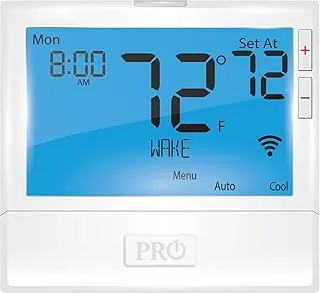
PRO1 T855iSH 8-Inch Backlit WiFi Thermostat

Size matters for the PRO1 T855iSH. With a massive 8-inch backlit display, this is the choice for anyone who finds modern, tiny thermostats frustrating to use. It is a powerhouse for conventional and heat pump systems, offering a 7-day programmable interface that is clear and easy to read from across the room.
While it feels more like a piece of high-end utility equipment than a lifestyle gadget, its ‘Auto Changeover’ AI ensures that your home never fluctuates into discomfort during those awkward spring and fall months.
Pros:
- Massive, easy-to-read 8-inch screen
- Keypad lock for high-traffic areas
- Excellent for multi-stage heat pumps
Cons:
- Design is very utilitarian
- Requires a 24V power source (C-wire)
Google Nest Thermostat (Sand)
The standard Google Nest Thermostat in ‘Sand’ is a masterclass in soft, approachable design. It is meant to blend into a room’s decor rather than stand out. Despite its entry-level positioning, it still features the core AI energy-saving features that made Nest famous, including the ability to turn itself down when you leave the house.
It is Matter-ready, meaning it will play nice with your other smart home devices, and the mirror-finish display is a lovely touch for a modern interior.
Pros:
- Beautiful Sand color palette
- Budget-friendly entry into the Nest ecosystem
- Matter integration for cross-platform use
Cons:
- Lacks the ‘Learning’ AI of the higher-end model
- Plastic housing feels less premium
Google Nest Thermostat (Charcoal)
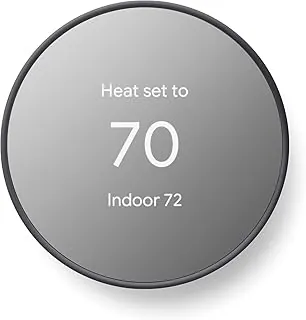
Identical in performance to the Sand model, the Charcoal version offers a moody, sophisticated alternative for darker walls or minimalist setups. It provides the same programmable efficiency and Energy Star ratings that help lower utility bills by up to 15% on average.
The AI focus here is on simplicity—it monitors your HVAC system for irregularities and sends alerts to your phone if it detects that something might be wrong with your furnace or AC.
Pros:
- Sleek Charcoal finish for modern decor
- Proactive HVAC monitoring alerts
- Simple, intuitive touch-edge controls
Cons:
- Does not support remote sensors
- Limited advanced HVAC compatibility
The Verdict: Choosing Your 2026 Climate Controller
Selecting a thermostat in 2026 is no longer about just ‘turning on the air.’ If you want the absolute peak of AI technology and aesthetics, the Google Nest Learning Thermostat (4th Gen) is the winner. For those who prioritize indoor health and high-end materials, the ecobee Premium remains the king of the mountain.
However, if you are retrofitting an older home or have a complex heating system, the tekmar Invita or the Honeywell X8S offer the technical muscle that ‘lifestyle’ thermostats sometimes lack. Whichever you choose, ensure it is Matter-enabled; the future of the smart home is all about devices that finally speak the same language.