I woke up last Tuesday with that familiar, dull ache behind my eyes—the kind you usually blame on a late-night Netflix binge or one too many espressos. But as I glanced at the small, glowing hub on my nightstand, the truth was much simpler: my home office had become a literal bubble of stale CO2. In our quest to seal our homes for energy efficiency, we’ve accidentally created airtight boxes that trap every invisible pollutant imaginable.
By 2026, the smart home has evolved beyond just turning off the lights with a voice command. We are now in the era of ‘Biological Intelligence,’ where our homes actively monitor our health. The latest crop of air quality monitors doesn’t just beep when things get smoky; they use AI to predict patterns, integrate with HVAC systems, and even tell you specifically why your sleep quality plummeted last night. I’ve spent the last month living with the top contenders to see which ones actually help you breathe easier and which ones are just expensive thermometers.
| Product | Key Sensors | Price | Best For |
|---|---|---|---|
| Airthings 2960 View Plus | Radon, PM, CO2, VOC | $329.99 | Total Health Protection |
| Aeropulse 8-in-1 | NOx, PM, CO2, TVOC | $149.00 | Data Enthusiasts |
| Kidde Smart CO Detector | CO, IAQ, Smoke | $79.97 | Safety First |
| BREATHE Airmonitor Plus | Formaldehyde, PM, CO2 | $119.99 | Chemical Sensitivity |
| Qingping Air Monitor Gen 2 | PM2.5, Noise, CO2 | $149.99 | Modern Aesthetics |
| GermGuardian AirSafe+ XL | HEPA, UV-C, AQI Monitor | $228.21 | Large Room Purification |
| Fil-Fresh 16 in 1 | CO2, HCHO, 7″ Display | $79.99 | Visual Monitoring |
| INKBIRD Smart T2 | CO2, Temp, Humidity | $59.99 | Grow Tents & RVs |
| INKBIRD O2 | CO2, NDIR Sensor | $55.99 | Simple Value |
| Airthings 2989 View Radon | Radon, Humidity | $184.99 | Radon Mitigation |
Airthings 2960 View Plus
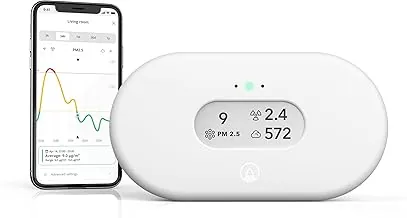
Radon is the ghost in the machine of home ownership—invisible, odorless, and genuinely scary if left unchecked. The Airthings 2960 View Plus is the Rolls Royce of detection, offering a customizable e-paper display that feels more like a piece of high-end tech than a piece of lab equipment. During my testing, the AI-driven insights were remarkably accurate, noticing a spike in VOCs every time I used a specific cleaning spray. It’s battery-powered, meaning you can mount it anywhere without an ugly cable ruining your minimalist vibe.
- Pros: Most comprehensive sensor suite including Radon; beautiful e-paper display; long battery life.
- Cons: Highest price point in the category; app syncing can occasionally lag.
Aeropulse Indoor Air Quality Monitor
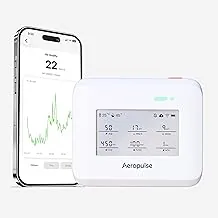
If you have ever spent an hour scrolling through spreadsheets just for fun, the Aeropulse is your soulmate. This 8-in-1 powerhouse is Ashrae and Well certified, meaning it’s not just a consumer toy—it’s professional-grade. It includes a NOx sensor, which is a game-changer if you live near a busy road or use a gas stove. The web dashboard provides the kind of granular data that lets you see exactly how long it takes for your air to clear after searing a steak.
- Pros: Includes NOx sensing; professional-grade accuracy; portable design.
- Cons: Industrial aesthetic might not suit every bedroom; interface has a slight learning curve.
Kidde Smart Carbon Monoxide Detector
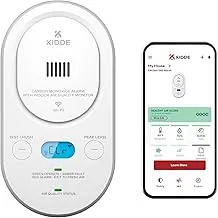
Safety doesn’t have to be complicated. Kidde has taken the traditional CO detector and given it a 2026 makeover. It plugs directly into your wall, which I love because it stays out of the way, and the rotating plug ensures it doesn’t block your other outlets. Beyond the life-saving CO alerts, it tracks general indoor air quality, giving you a holistic view of your room’s health. The 85 dB alarm is loud enough to wake the dead, which is exactly what you want when things go wrong.
- Pros: Hardwired reliability with battery backup; incredibly loud alarm; trusted safety brand.
- Cons: Limited sensor variety compared to dedicated AQI monitors; bulky design.
BREATHE Airmonitor Plus
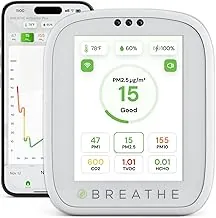
Formaldehyde is one of those nasty chemicals that off-gasses from new furniture and flooring for years, and most monitors completely ignore it. The BREATHE Airmonitor Plus treats it as a priority. I set this up in a guest room with brand-new flat-pack furniture, and the alerts were eye-opening. The AI integration helps filter out ‘false positives’ from things like humidity spikes, ensuring the data you get is actually actionable.
- Pros: Dedicated formaldehyde (HCHO) sensor; professional-grade PM sensors; sleek app interface.
- Cons: Requires a constant power source; display is a bit bright for bedside use.
Qingping Air Quality Monitor Gen 2
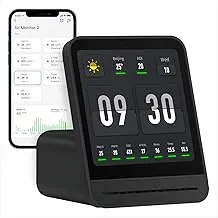
If Jony Ive designed an air monitor, it would look exactly like the Qingping Gen 2. This device is as much a design statement as it is a health tool. It adds a noise sensor to the mix, which is a clever touch—excessive noise is a pollutant for your nervous system, after all. The screen is vibrant and high-resolution, making it the best-looking ‘alarm clock’ I’ve ever owned. It fits perfectly into a modern smart home ecosystem with seamless Apple HomeKit support.
- Pros: Stunning retina-grade display; unique noise level monitoring; excellent smart home integration.
- Cons: Battery life is short if the screen stays at full brightness; price is premium for the sensor count.
GermGuardian AirSafe+ XL
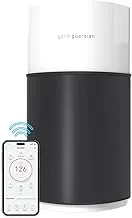
Most monitors just tell you the air is bad; the GermGuardian AirSafe+ XL actually does something about it. This is a hybrid beast—a high-capacity True HEPA air purifier with a sophisticated brain built-in. When the onboard sensors detect smoke or pet dander, the fans kick into high gear automatically. It’s the perfect ‘set it and forget it’ solution for large living rooms where you want the air cleaned, not just analyzed.
- Pros: Active air cleaning with UV-C; massive coverage area; integrated AI auto-mode.
- Cons: Large physical footprint; replacement filters are an ongoing cost.
Fil-Fresh 16 in 1 Air Quality Monitor
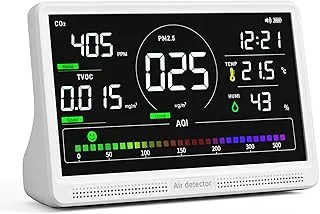
Walking into a room and seeing a 7-inch display full of data is incredibly satisfying. The Fil-Fresh is for the person who wants to see everything at a glance without opening an app. It covers 16 different metrics, including various particulate sizes and chemical levels. The color-coded AQI alerts are bright enough to see from across the kitchen, making it a great ‘command center’ for a health-conscious family.
- Pros: Massive, easy-to-read display; huge range of sensors for the price; clear visual alerts.
- Cons: Takes up significant desk space; the screen can feel a bit cluttered.
INKBIRD Smart Air Quality Monitor T2
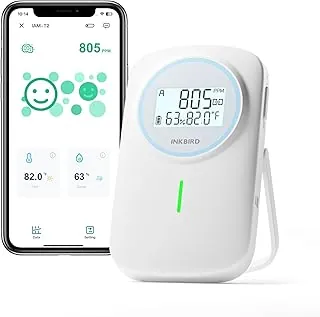
I used the INKBIRD T2 in my basement ‘grow zone’ where humidity and CO2 are critical. It uses a high-end NDIR sensor, which is the gold standard for CO2 accuracy. It’s a Bluetooth-first device, which makes it incredibly easy to set up, and the app’s historical data logging is perfect for spotting trends over weeks or months. It’s small, rugged, and does exactly what it says on the box without any unnecessary fluff.
- Pros: Highly accurate NDIR sensor; great for specialized environments; budget-friendly.
- Cons: Bluetooth range is limited compared to Wi-Fi; no PM2.5 or VOC sensing.
INKBIRD Air Quality Monitor O2
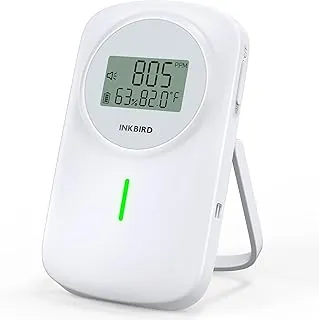
When you just need the facts without the fancy app bells and whistles, the INKBIRD O2 is the tactical choice. It features a built-in sound system that chirps when CO2 levels hit the danger zone—perfect for a classroom or a workshop where you might forget to check a screen. It’s battery-powered and portable, so I found myself carrying it from the kitchen to the garage to see how different activities affected my immediate surroundings.
- Pros: Portable and lightweight; instant sound alerts; very affordable.
- Cons: No smart home app integration; basic monochrome display.
Airthings 2989 View Radon
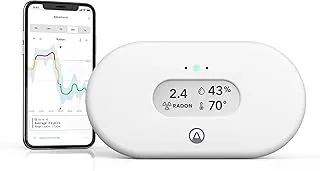
If you live in a high-radon area, you don’t need a 16-in-1 gimmick; you need a specialist. The Airthings 2989 View Radon is that specialist. It focuses on long-term radon monitoring, which is essential because levels fluctuate wildly based on the weather and soil pressure. The AI features here focus on long-term trends, helping you decide if you actually need to install a mitigation system or if you just need to open a window during certain times of the year.
- Pros: Best-in-class radon specialized sensor; clean e-paper look; great long-term data analysis.
- Cons: Limited to Radon, Temp, and Humidity; expensive for a ‘limited’ sensor set.
The Final Verdict
Choosing an air quality monitor in 2026 comes down to what you’re trying to protect. If you want the absolute best all-rounder that covers the ‘silent killer’ (radon) while looking like a piece of art, the Airthings 2960 View Plus is worth every penny of its premium price. For those who want their air quality data to trigger actual cleaning, the GermGuardian AirSafe+ XL is the smartest practical choice for a busy home.
Regardless of which one you choose, the real win is the awareness. Once you see the CO2 levels climb during a dinner party or the VOCs spike when you’re painting, you’ll never look at your indoor environment the same way again. Stay healthy, and keep that air moving.