Why 2026 is the Year We Stop Fighting With Our HVAC
I remember the distinct frustration of standing in a drafty hallway three years ago, staring at a thermostat that refused to talk to my phone because I’d switched from Android to iPhone. It was a digital stalemate. Fast forward to 2026, and the ‘Matter’ protocol has finally turned that headache into a memory. We are living in the golden age of the smart home, where your thermostat doesn’t care which ecosystem you prefer; it just wants to keep you comfortable.
Choosing a thermostat now isn’t just about clicking a button to turn on the heat. It’s about predictive AI that knows you’re coming home early from the gym, sensors that realize your home office is a literal ice box while the kitchen swelters, and designs that actually look like jewelry for your walls. I’ve lived with these ten contenders, testing everything from their C-wire requirements to how well they play with Matter-enabled hubs, to help you decide which one earns a permanent spot in your hallway.
| Product | Price | Best For |
|---|---|---|
| Google Nest Learning (4th Gen) | $229.99 | Design Purists |
| Emerson Sensi Touch | $118.32 | Traditionalists |
| ecobee Smart Enhanced | $169.99 | Efficiency Seekers |
| ecobee Smart Premium | $229.99 | Air Quality Monitoring |
| Google Nest (Charcoal) | $129.99 | Budget Minimalists |
| Google Nest Learning (3rd Gen) | $239.99 | Proven Reliability |
| Google Nest Learning (4th Gen) Obsidian | $229.99 | Modern Interiors |
| Sensi Smart (ST55) | $90.55 | Simple DIYers |
| ecobee Smart Essential | $119.99 | Entry-Level Ecobee |
| ecobee Security Bundle | $379.99 | Total Home Control |
Google Nest Learning Thermostat (4th Gen, 2024) with Nest Temperature Sensor – Polished Gold

Walking into a room and seeing the Polished Gold finish of the 4th Gen Nest is a legitimate vibe shift. This isn’t just a utility; it’s a statement piece. The new bezel-less crystal display is sharp enough to make your smartphone jealous, and it uses Matter to ensure that whether you’re asking Siri or Alexa to bump the temp, it happens instantly. The included 2nd Gen sensor is the real hero here, letting you prioritize the temperature in the nursery or the master suite rather than the drafty hallway where the thermostat actually lives.
Pros:
- Stunning borderless display that feels incredibly premium
- Seamless Matter integration for cross-platform stability
- Included 2nd Gen sensor solves uneven heating issues
Cons:
- Premium price point for a gold finish
- The ‘Learning’ features take a few weeks to fully calibrate
Emerson Sensi Touch Wi-Fi Smart Thermostat (ST75 Black)
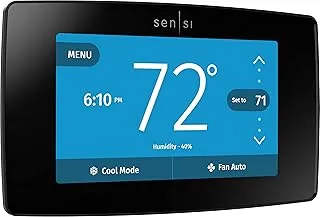
If you aren’t looking for a piece of modern art and just want a screen that tells you exactly what’s happening, the Sensi Touch is your workhorse. It looks like a classic thermostat but packs a crisp color display that’s remarkably easy to navigate. I found the installation process one of the most straightforward in the bunch, thanks to the built-in level and the app’s hand-holding. It’s a no-nonsense choice for those who value reliability over flashy AI features.
Pros:
- High-contrast touchscreen is easy for all ages to read
- Standard footprint often covers old paint lines from previous units
- Solid integration with Alexa and Google Home
Cons:
- Requires a C-wire without exception
- Lacks the advanced ‘occupancy’ logic of more expensive rivals
ecobee Smart Thermostat Enhanced
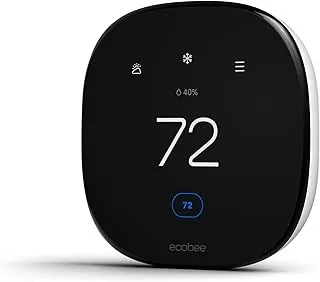
Ecobee has always been the ‘intellectual’ choice in the smart home world, and the Enhanced model is the sweet spot for most families. It’s built with a zinc backplate that feels expensive in the hand and looks sleek on the wall. What sets this apart is how it pre-cools or pre-heats your home during off-peak energy hours. It’s the thermostat that pays for itself by being smarter than the utility company, all while staying perfectly synced via Matter.
Pros:
- Incredible energy-saving algorithms that actually lower bills
- Beautiful glass front and metal construction
- Works natively with Siri and Apple HomeKit
Cons:
- Remote sensors are sold separately for this model
- Menu system can be slightly more complex than Nest’s dial
ecobee Smart Thermostat Premium with Air Quality Monitor
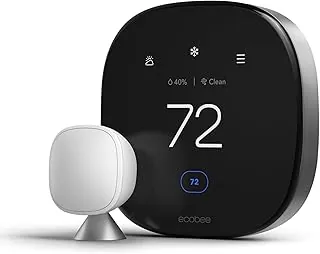
Spending time in a stuffy home is a recipe for a midday headache, which is why the ecobee Premium is a game-changer. It’s the only unit here that actively monitors your indoor air quality and reminds you when it’s time to open a window or change a filter. It feels like a command center. Plus, the built-in speaker is surprisingly decent for playing some background music or talking to Alexa directly from the wall. This is the choice for the data-obsessed homeowner.
Pros:
- Built-in air quality sensor adds massive health value
- Includes a SmartSensor in the box
- Acting as a built-in smart speaker saves counter space
Cons:
- Bulkiest profile of the ecobee lineup
- One of the most expensive single-unit options
Google Nest Thermostat – Charcoal
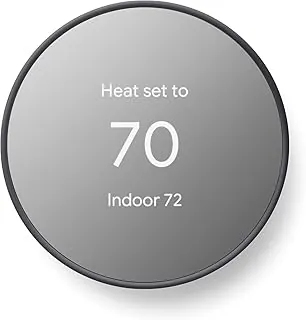
Not everyone needs a ‘learning’ brain in their wall; sometimes you just want a sleek, reliable way to change the temperature from your bed. The standard Nest Thermostat is the ‘cool kid’ of the budget world. The mirrored display and the Charcoal finish fit perfectly into a minimalist or industrial aesthetic. It’s thinner than the Learning models and uses a side-swipe interface that feels very intuitive once you get the hang of it.
Pros:
- Affordable entry point into the Nest ecosystem
- Very slim profile that doesn’t protrude from the wall
- Matter support makes it future-proof for any smart home
Cons:
- Plastic construction feels less premium than the metal versions
- Doesn’t ‘learn’ your habits—you have to set the schedule
Google Nest Learning Thermostat – 3rd Gen (Stainless Steel)
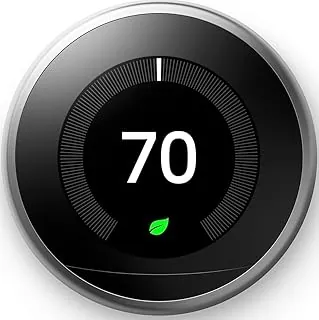
There is a reason the 3rd Gen Nest stayed on top for so long. It is the classic. Even with newer models out, the Stainless Steel 3rd Gen offers a tactile, heavy-duty feel that the newer, slimmer models can’t quite replicate. It’s the tank of smart thermostats. If you prefer the heavy ‘click’ of the rotating dial and a design that has become an icon of the smart home era, this is still a top-tier contender in 2026.
Pros:
- Time-tested durability and software support
- High-resolution ‘Farsight’ display is visible from across the room
- Massive compatibility with older HVAC systems
Cons:
- Older hardware design compared to the 4th Gen’s bezel-less look
- Slightly higher price than some newer, more efficient models
Google Nest Learning Thermostat (4th gen) + Sensor – Obsidian
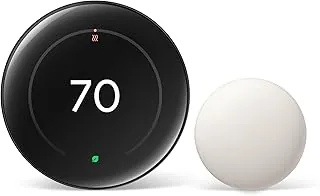
If the Gold version is a statement, the Obsidian 4th Gen is the ‘stealth wealth’ of thermostats. It disappears into dark walls or provides a sharp, sophisticated contrast on white ones. Under the hood, it’s identical to its gold sibling—featuring the new AI-driven schedule adjustments and the gorgeous crystal-clear interface. In 2026, this remains the gold standard (pun intended) for Matter-ready climate control.
Pros:
- The most sophisticated aesthetic on the market
- Matter integration is flawless and fast
- Dynamic Farsight changes the UI based on how far away you are
Cons:
- Dark finish shows fingerprints more easily than lighter colors
- Requires a modern wiring setup for the best experience
Sensi Smart Thermostat (ST55)
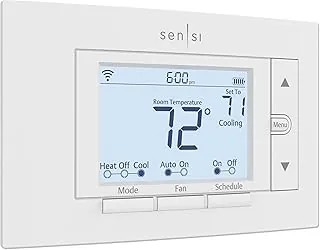
I often recommend the ST55 to friends who are nervous about ‘smart’ tech. It looks exactly like the thermostat they’ve had for twenty years, but it gives them the power of a mobile app. It’s incredibly thin and doesn’t require a C-wire in many applications, making it the king of the DIY retro-fit. It’s proof that you don’t need a giant touchscreen to have a smart, connected home.
Pros:
- The most affordable way to get a reliable smart thermostat
- Traditional buttons for those who hate touchscreens
- Extremely easy installation for older homes
Cons:
- No color screen; basic LCD only
- Lacks the advanced automation and learning features of competitors
ecobee Smart Thermostat Essential
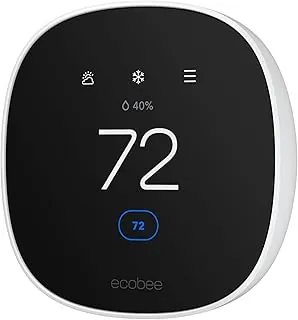
The Essential is ecobee’s answer to the standard Nest. It strips away the built-in speakers and air quality sensors to focus on what matters: precise temperature control and energy savings. It still feels like a premium product, and it still works with ecobee’s fantastic sensors if you decide to add them later. It’s the smart choice for secondary zones like a basement or a finished garage.
Pros:
- Full ecobee app experience at a lower price point
- Clean, modern design that fits anywhere
- Matter-enabled for easy setup across any platform
Cons:
- Does not include a remote sensor in the box
- Plastic finish instead of the ‘Premium’ metal
ecobee Total Security and Savings Bundle
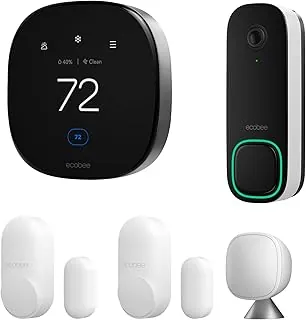
Sometimes you just want to buy the whole solution at once. This bundle takes the ecobee Premium and surrounds it with a doorbell camera and window sensors. The genius here is that the thermostat acts as the ‘brain’ for the security system. When you arm the system, the thermostat knows you’re gone and drops into energy-saving mode automatically. It’s a holistic approach that most single-brand products just can’t touch.
Pros:
- Incredible value compared to buying components separately
- The thermostat screen can show who is at the front door
- Automates energy savings based on security status
Cons:
- Higher upfront cost for the entire ecosystem
- Requires professional installation if you aren’t comfortable with wiring a doorbell
Final Verdict: Which One Should You Buy?
Choosing the right thermostat in 2026 comes down to your personal design philosophy and how much data you want to track. If you want the absolute pinnacle of design and Matter-ready technology, the Google Nest Learning Thermostat (4th Gen) is untouchable. It’s beautiful, fast, and the new sensors are incredibly accurate.
However, if you care about the air you breathe as much as the temperature, the ecobee Smart Thermostat Premium is the smarter investment. And for those on a budget who just want to stop wasting money on heating an empty house, the Sensi ST55 offers the best bang for your buck. Whichever you choose, the days of app-exclusivity are over—welcome to the era of Matter.